


what makes Montessori toys special?
Montessori toys are not built to entertain the child, but rather to engage their curiosity, creativity, and problem solving skills.
Children love to learn. They are naturally curious and fascinated by the world around them. They are eager to perfect their own skills and mimic the things they see older children and adults doing. They “play” to absorb new information and to train their skills. They enjoy repeating over and over these new skills until they have been perfected.
A child who is confident in their surroundings and their ability to approach the things that intrigue them is one who learns actively from their environment.
independence & perseverance
Montessori fosters independence and self-direction through the thoughtful design of each toy, through the layout of the play space, and through the way the adult interacts with the child. When children have more control over their learning, they work harder, perform better, retain more information, and are more creative and joyful.
Children learn most when presented with just the right amount of challenge, not so easy that they are bored and not so difficult that they are frustrated. The Montessori curriculum is thoughtfully designed and timed so that children are repeatedly entering this ideal zone for learning.
Montessori maps a child’s development so that with each toy, the child goes through the experience of struggling with a new skill, practicing and then mastering it. Mastering challenging activities helps children to develop healthy self-esteem and the self-awareness that they can improve their abilities and increase their intelligence. Children with this independent mindset also persevere longer on challenging tasks, a valuable life skill.
how are Montessori toys different from commercial toys?


- Montessori toys are designed to meet the child’s developmental stages.
- They provide just the right amount of challenge, without being over stimulating.
- They isolate the difficulty of learning one new concept at a time . This allows the child to challenge themselves without getting overwhelmed.
- Montessori toys help children to self-correct. This encourages your child to repeat and gain the tremendous benefits of solving a problem independently.
how to use a Montessori shelf at home


The goal of the Montessori shelf is not to fill children with information but rather, to provide a rich environment and support their natural drive to learn through play.
rotate, guide & observe
- Add 6 toys to the shelf
- Allow them to play with the toys on a carpet or low table next to the shelf
- Rotate toys according to their interest:
If they don’t use one of the toys on the shelf, it might be too easy or too difficult for the child and should be altered or rotated out - Show them how to use a new toy when you add it to the shelf, then let them use it independently from then on
which toys should I buy?
less is more
You probably already have a lot of toys for your little one. Before buying anything, go through what you have and choose 6 good toys to start off with and the rest can be stored away for later.
levels of difficulty
The best toys for at home are ones that will grow with your child, offering multiple levels of difficulty. I have included a table with 6 examples below to demonstrate what this means.
level one | 12-16 months


Montessori Puzzle Box
$50 off promo code >>>


Ring on a rocking base


Pegboard with 4 kinds of wood


Box of containers
similar suitcase available on Amazon


Bead Threading
trays from Absorbent Minds


Russian Nesting Doll
level two | 20 – 24 months

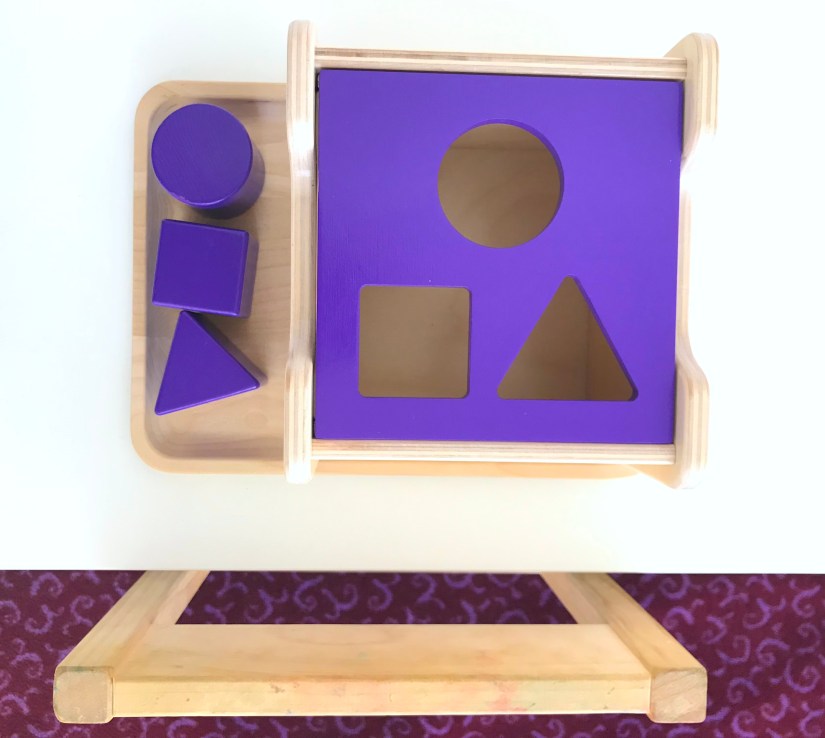
from MontiKids – Level 5
MONTESSORIMOTHER


similar toy by Ancona


handmade by Mamumabird


find containers around the house your child enjoys, clean them, & add them to their box


DIY IKEA Hack – Mula
more IKEA hacks from my classroom here


different styles available on Etsy
Thank you for reading! I hope this blogpost has been useful for your family’ s Montessori journey. Feel free contact me if you have any questions!